A 74-Year-Old Woman with a Yen to See the World, a Supportive Husband, and a Couple of Backpacks…

All my life, I’ve loved to travel. My dream has been to visit all the countries that interest me on every continent. Until July 2021, however, I’d never left North America.

In Spring of 2021, we could see the world beginning to reopen. Dempsey said, “This year is yours. It’s time to make your travel dream come true.” And so we did!

We’re spending fifteen weeks exploring the world, and you’re invited along.

My Blog

Lisbon
Lisbon was the final stop on our journey through continental Europe. It’s a magnificent small city with a beautiful setting, situated on the River Tagus just above the point it flows into the Atlantic. There are welcoming people, impressive architecture and monuments, and a fascinating history. The area has been continuously occupied since the time of the Neanderthals. The Romans left their mark on the city, as did the Moors, whose presence is referenced in the tile work seen on buildings, sidewalks, and public squares. At times it was governed by the French, the Spanish and even briefly by the English.
In 1755, two-thirds of the buildings in the city were destroyed, and up to 60,000 lives were lost, in one of the most devastating earthquakes in European history. Many survivors fled the falling buildings and rushed to the open squares by the Tagus, but they were killed by a 7-meter tsunami that flooded the mouth of the river. For days fires raged in the city, taking yet more lives.
The 1st Marquis of Pombal was asked by King Joseph I what to do. His answer was famously succinct: “Bury the dead. Feed the living. Rebuild the city.” He was charged with doing that, and much of the city now reflects his efforts. In order to rebuild as quickly as possible, he directed the design of a single style of construction template and put the military to work putting up new buildings. These were put on pilings driven deep into the sandy ground, with masonry walls between them. The rebuilt areas had wider streets for better light and circulation, as well as room for first responders to enter each area when needed. He also established shipbuilding and new docks on the river, and Lisbon is still today a major port for shipping of goods to Europe.
As we explored the city, we saw streets and streets of the Pombaline buildings which have been personalized and individualized over the centuries. We also saw the surviving old neighborhoods closest to the river, characterized by their narrow winding streets, ancient stone buildings, and sharp changes in elevation from below and above the steep hills.
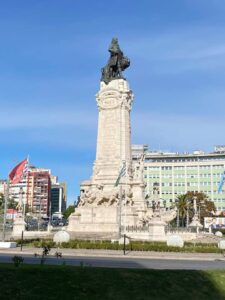
This statue of the Marquis of Pombal is set at the confluence of several wide avenues, in what is considered the center of the city.
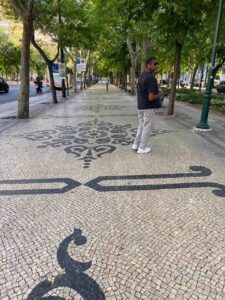
The Avenida de Liberdade extends from the Pombal monument down into the old city. It’s a beautiful street with broad tiled sidewalks abutting green space and shaded by trees. Expensive hotels and shops line the upper part of the avenue.
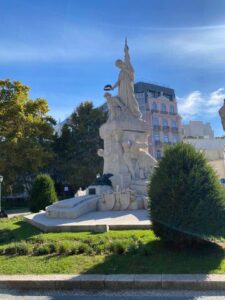
On the avenue is the Monument to the Great War Dead, which memorializes those who died in WWI.
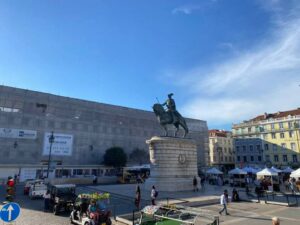
One of many equestrian statues in Lisbon. I think this one is of King Jaoa I.
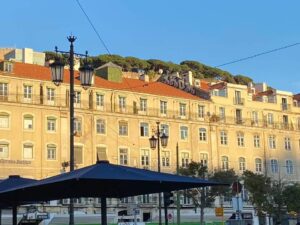
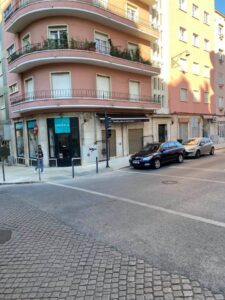
Many of the buildings are painted pink. Others are covered in tile.
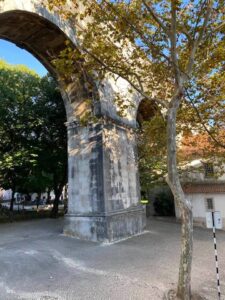
One of the arches of the Roman aqueduct, which survived the earthquake and continued delivering water to the city.
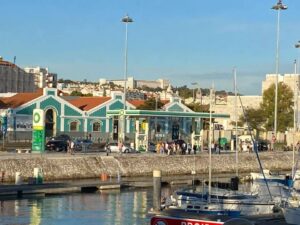
A marina on the River Tagus, in the Belem area of the city.
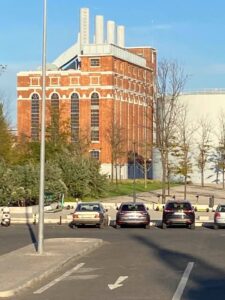
The old electrical works building on the River Tagus.
A shop dedicated to all things Lisbon soccer.
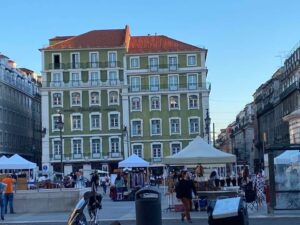
Buildings tiled in green.
One of Lisbon’s many plazas, the Praca de Figueroa, with the Alfama district on the hill above.
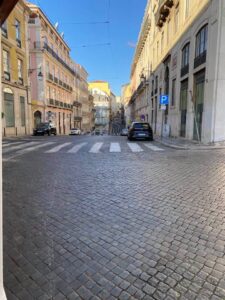
Cobblestone streets.
The National Theatre, In front of this building is a beautiful square with spectacular fountains and statuary. Somewhere we have a photo of the fountains lighted up and flowing.
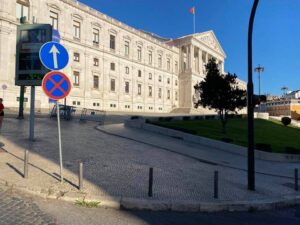
There is also much beautiful architecture from the neoclassical period.
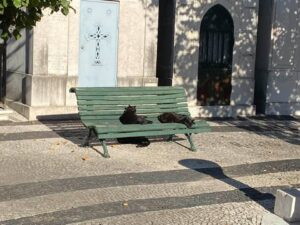
Cats in the sunshine in the Cemetario Prazeres.
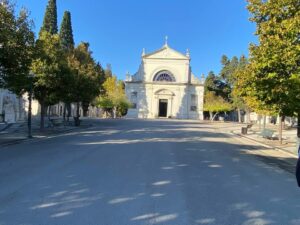
The chapel that serves the cemetery
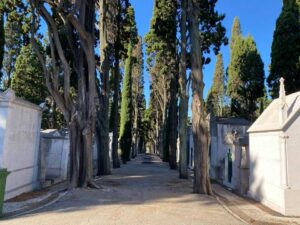
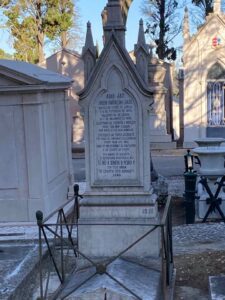
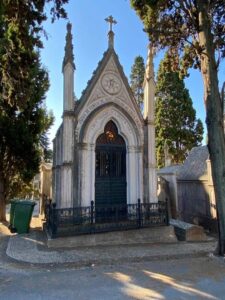
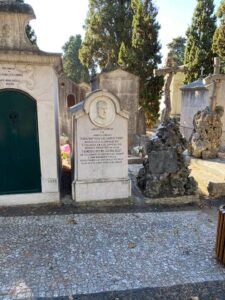
Cemetario Prazeres, which we found by accident when our trolley stopped there, is like a city of the dead. There are roads lined by mausoleums and monuments to individuals and many families.
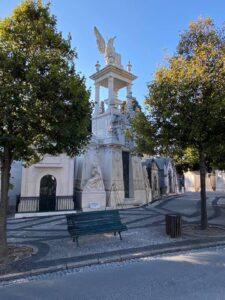
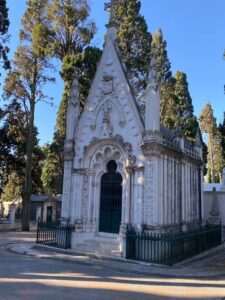
One of the mausoleums.
The avenues are lined by cypress trees more than a century old.
Another view.
Many of the crypts resemble houses, and hold the remains of entire families.
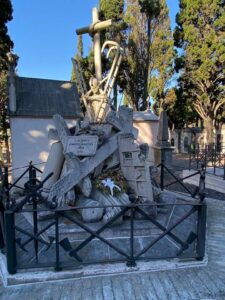
Lisbon’s firefighters are buried here, and this monument honors their service.
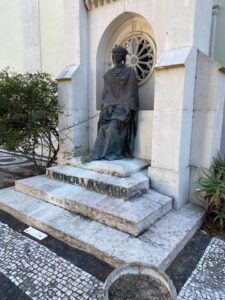
Another crypt. The cemetery was established in 1833.
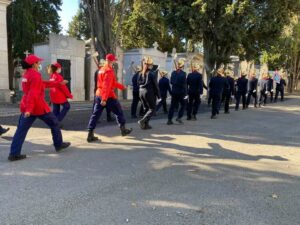
As we were resting on a bench, we saw a parade of firemen marching to a drummer enter the property, perhaps to maintain the graves of the fire fighters, who are buried in a dedicated section in the back of the cemetery.

Musee de Montmartre

Our apartment in Montmartre was just across the street from Sacre Coeur (Sacred Heart) Basilica. We took the funicular up and made a visit, then we walked from the other side to the Musee de Montmartre.  The neighborhood has been home to many artists, writers and...

read more

Palace of Versailles

We took the train out to the Palace of Versailles, which is now enveloped by the lovely Parisian suburban town of Versailles. The opulence makes it easy to understand how the palace became a symbol of everything the French revolutionaries resented about the monarchy....

read more

Race in Paris

Last night we happened across a film from 1961, Paris Blues. Sidney Poitier and Paul Newman were jazz musicians living in Paris, and Diahann Carroll and Joan Woodward played American women on vacation together. Race played a significant role, as the couples fell in...

read more